

Your symptoms are biological signals. Here is what the evidence says about when to act, what to use, and how to support your metabolism in your 40s.If you have been experiencing the early signs of perimenopause, irregular cycles, mood shifts, disrupted sleep, weight that has stopped responding the way it used to, the next question is what to do about it. The options are real, evidence-based, and more nuanced than most women are told.




Your symptoms are biological signals. Here is what the evidence says about when to act, what to use, and how to support your metabolism in your 40s. If you have been experiencing the early signs of perimenopause, irregular cycles, mood shifts, disrupted sleep, weight that has stopped responding the way it used to, the next question is what to do about it. The options are real, evidence-based, and more nuanced than most women are told.
Hormone therapy for perimenopause remains one of the most misunderstood treatments in women’s medicine. The widespread hesitation around it stems largely from the 2002 Women’s Health Initiative trial, whose conclusions about breast cancer and cardiovascular risk have since been significantly revised, particularly as they apply to younger women in perimenopause.
A 2023 review led by the American College of Cardiology concluded that hormone therapy is appropriate first-line treatment for vasomotor symptoms in women without contraindications, and that the risk-benefit calculation is fundamentally different for women who start hormone therapy in perimenopause compared to those who start it a decade or more after menopause. Four leading medical societies now recommend hormone therapy for the treatment of symptomatic perimenopausal women.
A 2025 narrative review synthesising evidence up to September 2025 confirmed that hormone therapy provides the most effective relief of vasomotor symptoms, is first-line treatment for genitourinary symptoms, prevents early postmenopausal bone loss, and reduces fractures in selected cases. Benefit-risk depends on timing, route, and dose, not on the label ‘hormone therapy’ as a category.
The question of when to start hormone therapy is one of the most important in perimenopausal care, and the answer is now well-supported by evidence. The ‘timing hypothesis’ holds that hormone therapy initiated early in the perimenopausal window, before the age of 60 or within ten years of the final menstrual period, carries a meaningfully different risk-benefit profile than therapy started later.
Research published in CMAJ in 2023 found that early initiation of hormone therapy shows evidence of a possible reduction in coronary artery disease, while late initiation does not show the same protective effects. Women who start hormone therapy before age 60 or within ten years of menopause tend to experience the greatest symptom relief and cardiovascular protection, with minimal risk of adverse events.
For symptomatic perimenopausal women without contraindications, current evidence supports early consideration of hormone therapy rather than waiting for symptoms to become severe or disabling. The right approach varies by individual, but symptom burden, personal health history, and long-term goals all inform whether hormone therapy belongs in the picture.
When to start hormone therapy: Current evidence supports initiating hormone therapy in symptomatic perimenopausal women before age 60 or within ten years of the final menstrual period. Starting early, not waiting for symptoms to become severe, is associated with greater long-term cardiovascular, bone, and cognitive benefit.
Bioidentical hormones in perimenopause are hormones structurally identical to those produced by the human body. The term is clinically meaningful, particularly when it comes to progesterone.
A 2023 systematic review of 51 studies comparing transdermal and oral hormone therapy routes found clear evidence that VTE (blood clot) risk is higher with oral oestrogen and effectively neutral with transdermal oestrogen. The difference is mechanistic: oral oestrogen undergoes first-pass metabolism in the liver, increasing clotting factor production; transdermal oestrogen bypasses this pathway entirely.
Transdermal oestrogen is available as patches, gels, and sprays, all of which deliver oestrogen directly through the skin at physiological concentrations. For most women, especially those with any cardiovascular or clotting risk factors, or elevated BMI, transdermal is the clinically preferred route.
Women with an intact uterus using oestrogen require a progestogen alongside it to protect the endometrial lining. The type chosen has real clinical consequences.
A 2022 population-based case-control study of 43,183 women published in Obstetrics and Gynecology found that menopausal hormone therapy with micronised progesterone was not associated with increased breast cancer risk (OR 0.99), while synthetic progestins were associated with a 28% increased risk (OR 1.28). When prescribing hormone therapy, micronised progesterone appears to be the safer progestogen choice.
Micronised progesterone is also structurally identical to endogenous progesterone, hence the term ‘body-identical’. Beyond breast cancer risk, it has additional benefits for sleep and anxiety, driven by its conversion to allopregnanolone and its effects on GABA receptors.
Bioidentical hormones in perimenopause: Regulated bioidentical hormones , transdermal oestradiol combined with micronised progesterone, have the most favourable safety profile of all hormone therapy formulations. The distinction from synthetic progestins is clinically significant, particularly for breast cancer risk and sleep quality.
For women who cannot or choose not to use hormone therapy, or who want to build the strongest possible foundation alongside it, natural support for perimenopause addresses the specific biological levers that shift during this transition.
The question of how to balance hormones in your 40s without medication is not about supplements replacing hormones. It is about supporting the systems, cortisol, insulin, mitochondrial function, inflammation, that modulate how oestrogen and progesterone fluctuations affect the body.
Magnesium is involved in over 300 enzymatic processes, including cortisol regulation, sleep quality, and blood sugar control. Deficiency is common in perimenopausal women and is frequently missed on standard testing. Magnesium glycinate or threonate are the most bioavailable forms for neurological and sleep-related benefits, while magnesium malate supports energy production.
Vitamin D functions as a steroid hormone rather than a simple vitamin, with receptors in ovarian tissue, muscle, bone, and the immune system. Deficiency is extremely prevalent in perimenopausal women and contributes to fatigue, mood disruption, accelerated bone loss, and impaired immune function. The critical variable is individual genetics: two women with identical sun exposure and diet can have dramatically different serum levels. Testing before supplementing and targeting levels above 75 nmol/L is recommended.
EPA and DHA support the production of anti-inflammatory prostaglandins, reduce cortisol reactivity, support cardiovascular function, and have direct benefits for mood and cognitive function. The perimenopausal brain is particularly sensitive to inflammatory signalling, and adequate omega-3 status is one of the most modifiable factors in this context.
Ashwagandha is an adaptogen that acts primarily on the HPA axis, reducing cortisol output and supporting stress resilience. For perimenopausal women, for whom cortisol dysregulation amplifies virtually every hormonal symptom, HPA-axis support is a genuine therapeutic target.
Creatine is rarely discussed in the context of perimenopause but has compelling evidence. It supports muscle protein synthesis, cognitive function, and bone density — three of the primary areas of decline during the transition. Combined with resistance training, it produces significant improvements in lean mass and upper and lower body strength in postmenopausal women.
Natural support for perimenopause: Magnesium, vitamin D, omega-3s, ashwagandha, and creatine are the five supplements with the most consistent evidence base for perimenopause specifically. None replaces an honest assessment of whether hormone therapy is appropriate, but all address real biological processes that lifestyle and diet alone may not fully correct.
Weight gain in perimenopause is one of the most frustrating and least well-explained experiences women have during this transition. The standard advice, eat less, move more, consistently underperforms because it ignores the specific metabolic changes at 40+ that have taken place.
A 2022 review published in Women’s Health Reports confirmed that fat storage shifts from peripheral (hips and thighs) to visceral (abdominal) during the menopausal transition, driven by oestrogen decline. Visceral fat is metabolically active in ways that subcutaneous fat is not: it drives inflammation, worsens insulin resistance, and increases cardiovascular risk independently of total body weight.
Research on oestrogen and adipose tissue metabolism published in 2023 confirmed that oestrogen deficiency leads to excessive fat accumulation and impairs adipocyte function through reduced insulin sensitivity, adipose tissue inflammation, and mitochondrial dysfunction in fat cells. The relationship is bidirectional: fat loss and hormone support can partially reverse these changes.
Research published in PMC in 2025 on oestrogen and metabolism confirmed that as oestrogen levels become unstable during perimenopause, women experience increased insulin resistance, shifts in fat storage, and greater risk of metabolic disorders including type 2 diabetes. The same carbohydrate intake that was well-tolerated at 38 may drive elevated fasting insulin and fat storage at 46. Addressing insulin resistance is the primary metabolic intervention in this context.
Practical levers for improving insulin sensitivity in perimenopause: reducing refined carbohydrate load, prioritising fibre and protein at each meal, time-restricted eating (consolidating food intake to an 8-10 hour window), and resistance training. All four work on the same metabolic pathway.
Muscle is the primary site of glucose disposal in the body. Losing it, which accelerates during the perimenopause without deliberate intervention, worsens insulin resistance and slows resting metabolic rate, making weight gain in perimenopause progressively harder to address through diet alone.
A 2022 meta-analysis of 74 RCTs on protein intake and muscle mass found that increasing daily protein intake significantly enhances lean body mass gains in adults undertaking resistance training, with the greatest benefit in those ingesting 1.6 g or more of protein per kilogram of body weight per day. For women in perimenopause and beyond, protein intake at or above this threshold, alongside consistent resistance training, is the most evidence-supported strategy for preserving the metabolic infrastructure that determines body composition.
Poor sleep, which is endemic in perimenopause, directly impairs insulin sensitivity, elevates cortisol, increases appetite-stimulating hormones, and makes fat loss physiologically harder. Treating sleep disruption, whether through hormone therapy, magnesium, sleep hygiene, or a combination, is not a lifestyle nicety. It is a metabolic intervention with direct consequences for body composition and metabolism changes at 40+.
Weight gain in perimenopause: This is not a calorie problem. It is a hormonal and metabolic shift driven by oestrogen-related changes in insulin sensitivity, visceral fat deposition, and muscle loss. The women who achieve the best results address all three in parallel, not as optional lifestyle changes, but as necessary biological interventions.
The most important shift in approaching perimenopause support is moving from a symptom-suppression model to a systems model. Mood swings before menopause are not a psychiatric issue, they are a GABA and serotonin signal. Weight gain in perimenopause is not a lifestyle failure, it is an insulin and adipose tissue signal. Brain fog in perimenopause is not stress, it is a neurological consequence of changing oestrogen levels.
Hormone therapy for perimenopause, bioidentical hormones, natural support, and metabolic optimisation are not competing approaches for different types of women. They are complementary layers that address different aspects of the same biological transition. The right combination depends on symptom profile, health history, personal preference, and what the underlying biology actually needs.
The goal is not to suppress perimenopause. It is to navigate it with the clearest possible picture of what is happening, and the best available evidence for what to do about it.
Curious to know more about the science of longevity and our innovative approach to a long and healthy life? You have come to the right spot.

More than 1,500 clients, CHF 2.7 million in revenue and a clear growth strategy: how Zurich-based AYUN is advancing personalised preventive medicine, and why private investors can now take a stake.

In this article, we’ll take you step by step through the Extended Longevity Check-up at AYUN. You’ll discover how we assess your health through precise measurements and comprehensive analyses, and how these insights translate into personalised recommendations for a longer, healthier life.
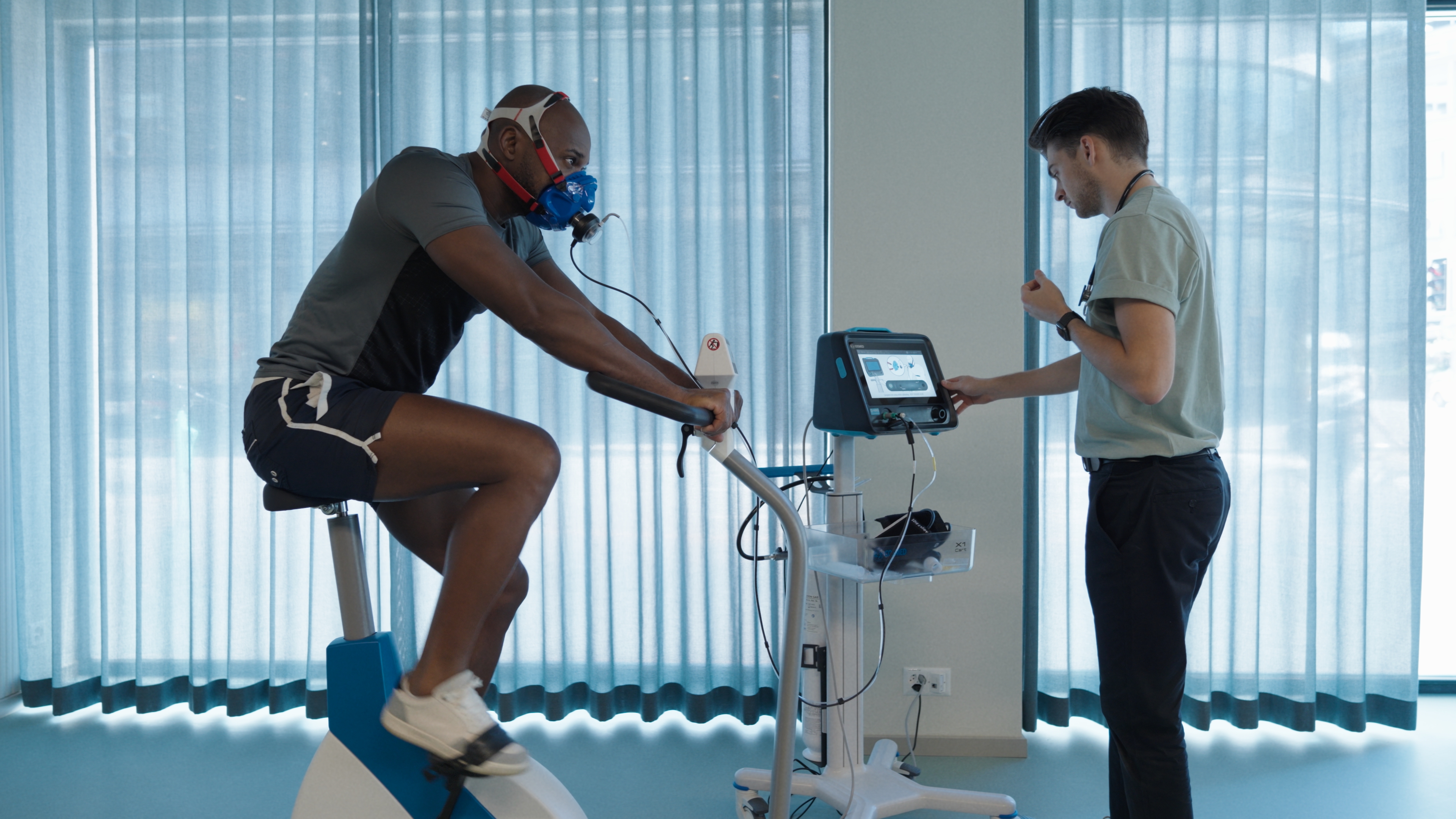
In this article, we’ll take you step by step through the Complete Longevity Check-up at AYUN. You’ll discover how we assess your health through precise measurements and comprehensive analyses, and how these insights translate into personalised recommendations for a longer, healthier life.




.svg)

