

In this article, we’ll take you step by step through the Extended Longevity Check-up at AYUN. You’ll discover how we assess your health through precise measurements and comprehensive analyses, and how these insights translate into personalised recommendations for a longer, healthier life.




Understanding your health is the first step towards maintaining it long term. Our Extended Longevity Check-up provides you with our most comprehensive, scientifically grounded overview of your current biological health status and shows you where you can take targeted action to improve your health, performance, and longevity. In this blog, we’ll guide you step by step through the check-up process.
AYUN offers three Longevity Check-ups - Essential, Complete and Extended - that build on one another, with each level adding further assessments. We’ve marked the differences with
→ single arrows for additions from the Essential to the Complete and
→ → double arrows for additions from the Complete to the Extended Check-up.
The entire check-up takes approximately 5 hours (→ 4.5 hours for the Complete and 4 hours for the Essential Check-up) and takes place at our clinic at Uraniastrasse 18, 8001 Zurich. As some parts of the check-up, such as the body composition scan, need to be performed on an empty stomach, all check-ups take place in the morning. You can choose if you would like to start at 8:00, 9:15, or 10:30 a.m. As soon as you arrive, we'll start your longevity morning.
Together with our physician, you’ll discuss your medical history, current lifestyle habits, sleep, nutrition, and mental stress. This conversation lays the foundation for your check-up. It helps us understand your current health status and identify areas that may require particular attention. In approximately 30 minutes, we develop an understanding of your individual risk factors and personal lifestyle context.
Next, we’ll take a blood sample for your genetic panel1 (single-nucleotide polymorphisms) and blood analysis. The genetic analysis reveals information about potential long-term risks, such as how your body processes fats, responds to certain toxins, or regulates inflammation, and which areas may require additional support. Your blood results provide insights into the current state of your metabolism, cardiovascular health, and hormonal balance.
→ Compared to the essential blood analysis with 19 selected blood markers, the complete blood analysis includes an additional 44 markers, providing insights into vitamins (like B12 or folic acid), minerals (like magnesium and calcium), insulin resistance, chronic inflammation, and hormonal balance.
→ → The Extended Check-up takes the analysis even further, with 70 selected blood markers providing thorough insights into inflammatory processes, oxidative stress, and cortisol balance. It also includes a mitochondrial function test using white blood cells from your blood sample. By assessing how these cells use oxygen and produce energy, the test provides additional insights into mitochondrial efficiency and energy reserves.
Together, these results contribute to an individual risk profile that goes well beyond a standard health check-up.
Your heart is at the centre of your health. Using a resting ECG, we assess the electrical activity and rhythm of your heart to help identify potential irregularities at an early stage. Blood pressure measurement provides insights into the pressure within your blood vessels and helps identify potential risk factors for cardiovascular disease early.
Using state-of-the-art scanning technology2, we precisely measure your muscle mass, fat distribution, and bone density. We compare these values with reference data from large-scale studies. By comparing your results with those of people in your age group, we can see exactly where you currently stand. This allows us to then identify areas where targeted action can help you stay strong and mobile in the long term.
Time to relax for a moment. You can have a drink and a snack, giving you a chance to catch your breath and reflect on the impressions you’ve gained so far.
Now it’s time for the most active part of your check-up.
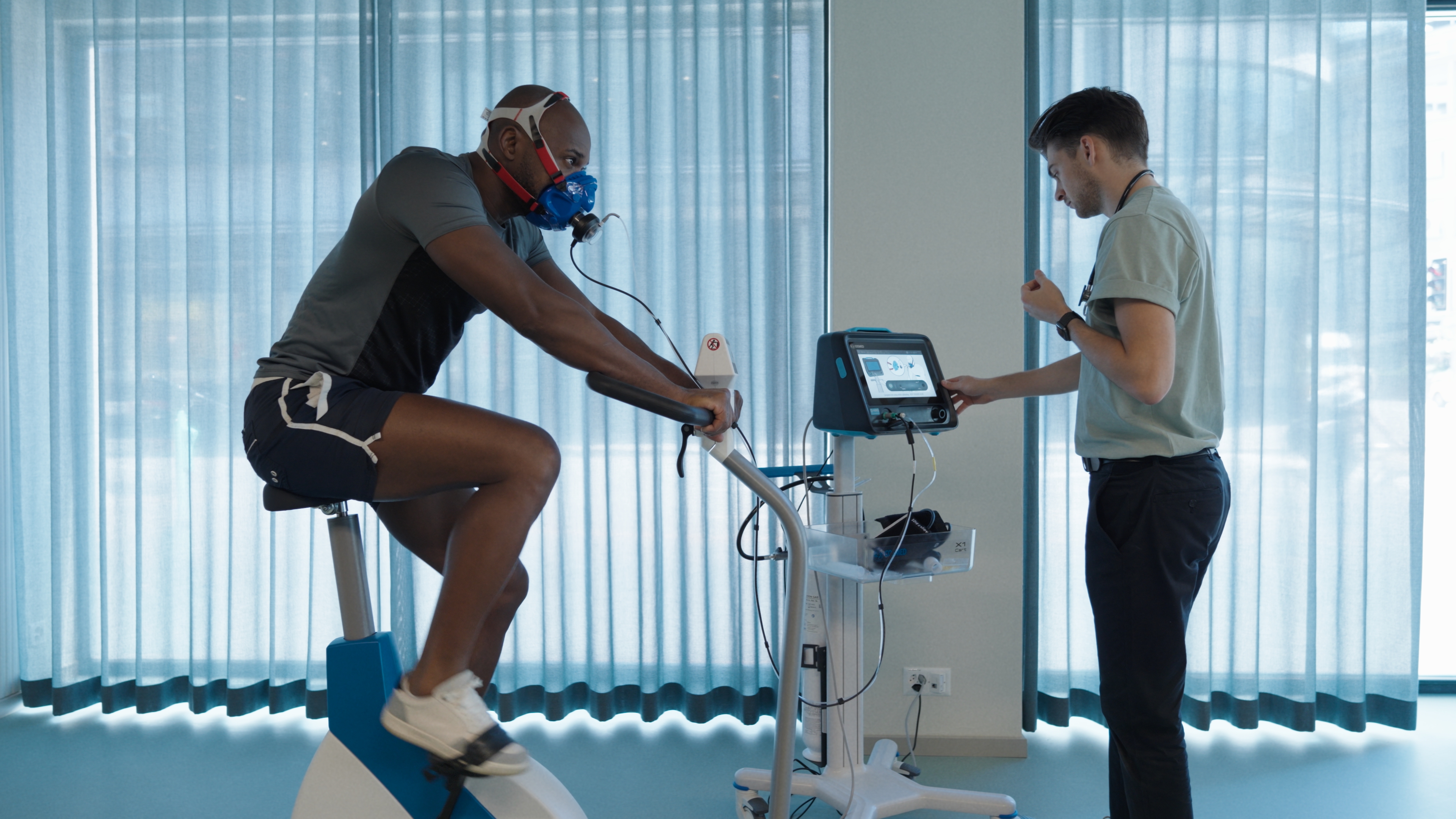
→ The physical assessment in the Complete and Extended Check-up goes a few steps further. With specialised equipment commonly used in elite sports, we conduct further tests:
→ Unlike in the Essential check-up, we’ll also set up your continuous glucose monitor (CGM). You’ll wear it for 10 days, allowing you to track how your glucose levels change throughout the day and night in response to meals, exercise, sleep, and your everyday routine. Unlike a single blood glucose measurement, continuous monitoring helps reveal patterns in how your body responds over time and gives us a more dynamic picture of your metabolic health.
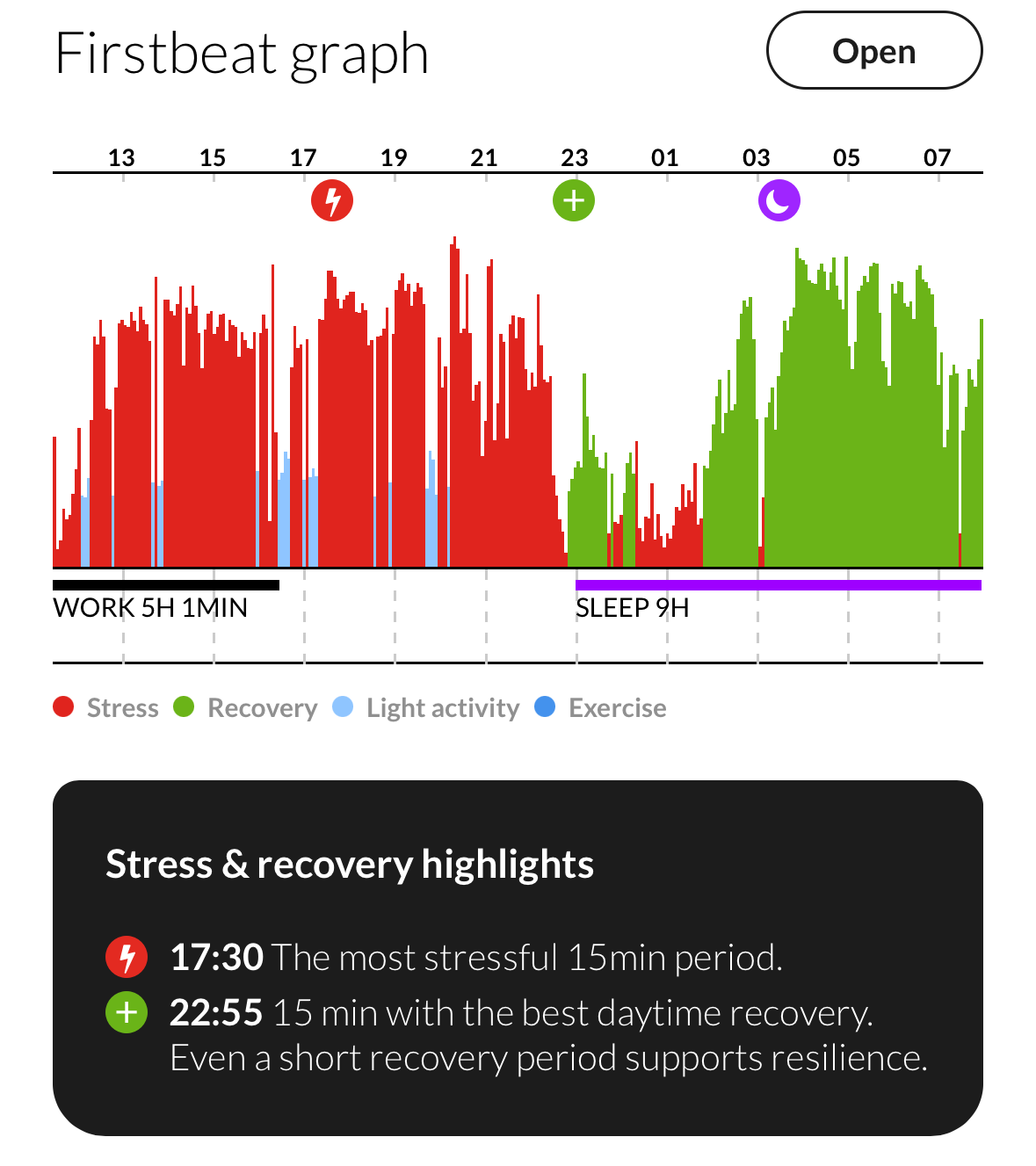
→ → Exclusively for the Extended Check-up, we also set you up with a device to assess your heart rate variability (HRV) over 5 days. By collecting data across your everyday life, we can identify patterns in how your body responds to stress and how well it recovers. The data also gives us insights into your sleep and physical activity, helping us understand your recovery and resilience beyond a single point-in-time measurement.
And that’s it! If you’d like, you can enjoy a refreshing rainforest shower or head straight home. Your appointment at the clinic is now complete.
→ → You’ll receive a kit to collect a stool sample at home and send it to the laboratory by post. The results provide insights into the diversity and balance of microorganisms living in your gut and can help identify potential imbalances. They are compiled into a dedicated microbiome report and used to inform personalised nutritional recommendations during your nutrition consultation.
We’ll send your blood samples to the laboratory and have your genetic panel analysed. We’ll also evaluate your 10-day CGM data, 5-day HRV measurements, mitochondrial function results and microbiome analysis as soon as the results are in. Once all reports are available, we’ll contact you to discuss the findings. Laboratory analysis usually takes four to five weeks.
All your data is evaluated by our interdisciplinary team. During a 2-hour consultation (→ 1.5h in the Complete and 1h in the Essential Check-up), you’ll review your report together with our physician. You’ll receive clear, prioritised recommendations covering nutrition, exercise, mental wellbeing, stress management, sleep, supplementation, and potential treatments. Everything is fully tailored to your individual needs and based on the data and findings from your check-up.
→ The Complete Check-up adds two individual consultations, which are also included in the Extended Check-up:
→ → The Extended Check-up goes further with a dedicated microbiome report and specialised nutrition consultation, translating your gut health findings into tailored nutritional recommendations.
Following your consultation, you’ll receive your personal advanced Longevity Report5 - a detailed yet easy-to-understand analysis of your biological health status. It shows:
All the measurements we’ve taken are included in your report, along with reference values for comparison. The personalised recommendations from your medical follow-up are also explained in detail.
→ Your 10-day CGM data and the results of your complete physical assessment are also integrated into your overall picture.
→ → The Extended Check-up adds your mitochondrial function, HRV, and gut microbiome results to this overall picture.
→ → This check-up is designed for people who want the most comprehensive possible picture of their health, bringing together meaningful insights to shape a personalised, actionable plan for long-term health and wellbeing.
The Extended Longevity Check-up takes the most comprehensive approach to preventive health by combining advanced diagnostics with real-world metabolic data, insights into cellular metabolism, stress and recovery, gut health, and personalised expert guidance.
If you have any questions about the check-up process, its contents, or your personal situation, feel free to book a free Info Call.
And if you’re ready to find out where you stand and how you can maximise your health, book your Extended Longevity Check-up at AYUN here.
[1] DNA analysis. (2026). Ayun. https://www.ayun.ch/tests/dna-analysis
[2] Body composition scan. (2026). Ayun. https://www.ayun.ch/tests/body-composition
[3] Why grip strength and functional stability predict your longevity. (2026). Ayun. https://www.ayun.ch/insights/why-grip-strength-and-functional-stability-predict-your-longevity
[4] VO₂max test. (2026). Ayun. https://www.ayun.ch/tests/vo2max
[5] What you can expect from your AYUN Longevity Report. (2026). Ayun. https://www.ayun.ch/insights/unlocking-your-health-potential-what-you-can-expect-from-your-ayun-longevity-report
Curious to know more about the science of longevity and our innovative approach to a long and healthy life? You have come to the right spot.
In this article, we’ll take you step by step through the Complete Longevity Check-up at AYUN. You’ll discover how we assess your health through precise measurements and comprehensive analyses, and how these insights translate into personalised recommendations for a longer, healthier life.
In this article, we’ll take you step by step through the Essential Longevity Check-up at AYUN. You’ll discover how we assess your health through precise measurements and comprehensive analyses, and how these insights translate into personalised recommendations for a longer, healthier life.
.jpg)
You are 44 years old. Sharp, organised, high-functioning. But lately you cannot find the word you are looking for mid-sentence. You wake at 3am and lie there for an hour. You are eating the same way you always have, but your waist is changing. Your hair is coming out in the shower. You feel like yourself but not quite yourself. Your GP ran blood work and said everything looks normal.What you may be experiencing are the early signs of perimenopause and they are some of the most commonly searched and least explained symptoms in women’s health. Brain fog, hormonal hair loss, night sweats, weight gain that does not respond to diet: these are not random. They are biological signals, each one pointing to a specific process that is shifting in your body. Understanding what is behind each symptom changes everything about what you can do about it.




.svg)

